Reimagining auctions
In order to call this redesign successful, we wanted to bring the thrill of the game back to auctions by creating a dynamic platform for lively bidding, vibrant community, and fair bid play, where each item's true value wins out in the end. In our early strategy discussions we identified four different target areas to improve in the new auctions experience: pre-bidding where you evaluate interest in the item, the bidding layer where you actively are attempting to win the item, extended bidding where serious competitors can buckle down, and the win/loss moments at the end of the auction.
88%
percentage of auctions that end with no bids
24 hr
amount of time left when most bids occur
We tested our early experience through early UXR sessions across two rounds of 1:1 remote research sessions. Participants were US-based, with a mixed demographic but all having experience buying in collectables. Our goal was to better understand users' perception, understanding, and reaction to each element of the proposed new auction experience. Through this research, we identified 3 key takeaways to help refine this new experience. Participant feedback revealed that pre-bids and shorter auctions time were considered as a respect of users' time, the redesigned bid layer helped to build user trust and create more transparency, and the extended bidding formats could bring excitement and fairness back to eBay auctions.
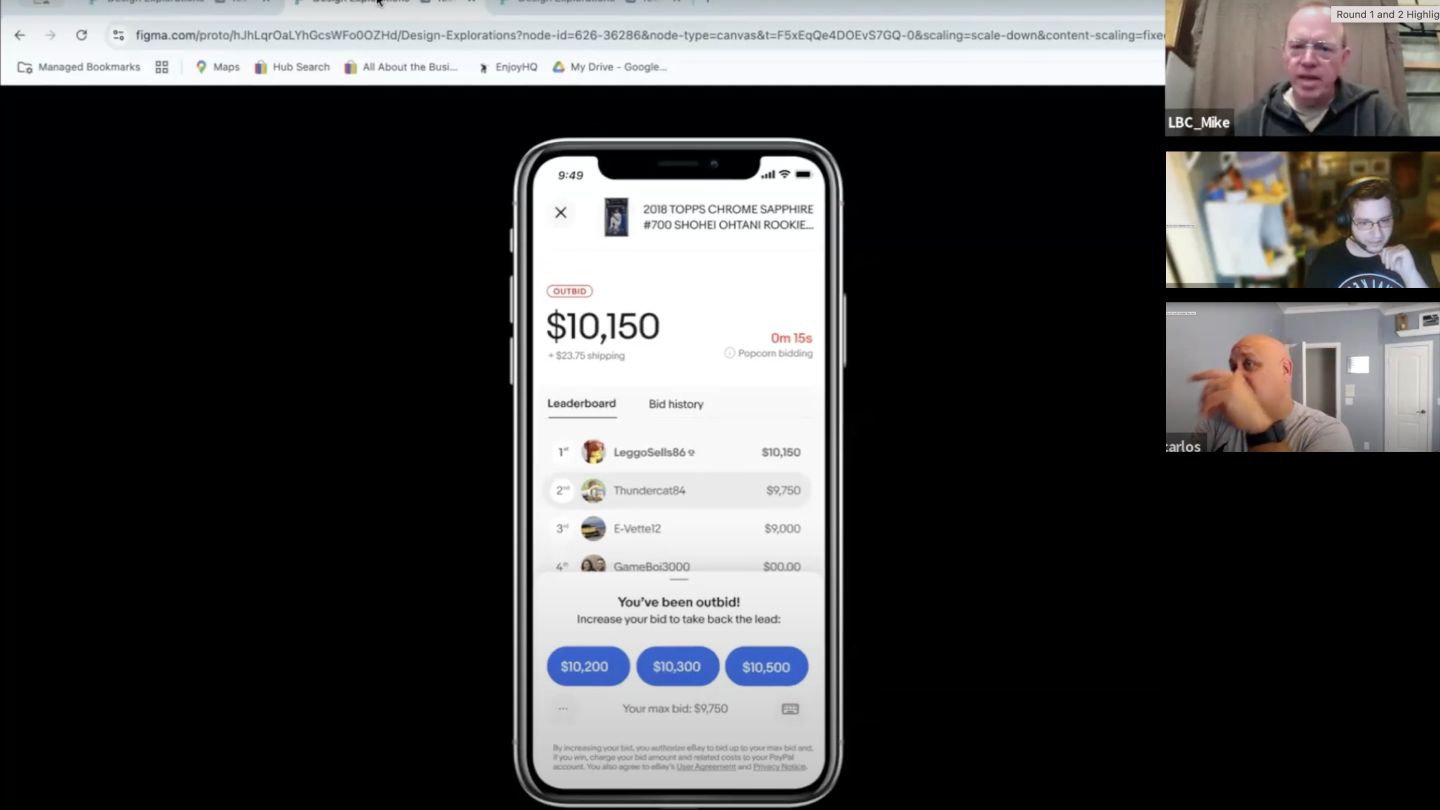
One of the key challenges during the project was balancing the excitement around the initial feedback with the need for a more engaging and user-friendly design. While the designs provided by the outside agency were well-received for their improved transparency, they lacked a sense of fun and felt more like spreadsheets—functional but uninspiring. Leadership expressed interest in exploring ways to make the experience more dynamic by incorporating elements like chat activity similar to eBay live to drive engagement. Taking this feedback into account, I was tasked with stepping in to reimagine the interface, focusing on making it more interactive and lively while maintaining the clarity users valued. Through iteration and collaboration, we developed a design that resonated with stakeholders and users alike, ultimately choosing my solution over the agency's original concepts.
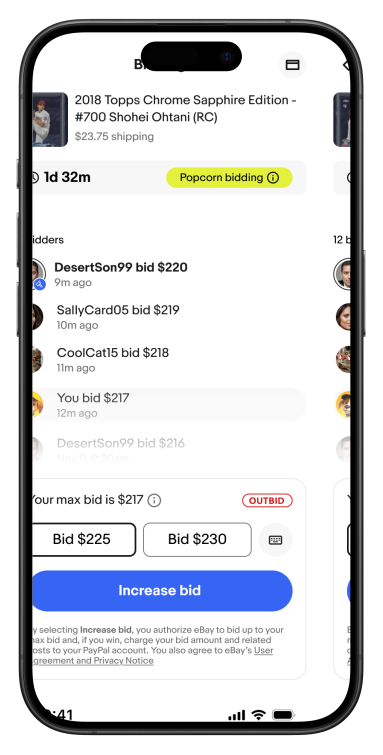
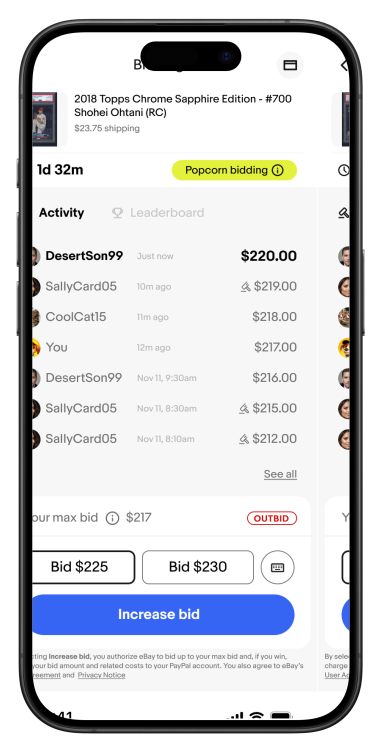
The final solution as developed by blending the new design direction based on my iterations with valuable feedback gathered during user testing. Testing revealed what users appreciated most—clarity, transparency, and functionality—while also highlighting opportunities to make the experience more engaging. Building on these insights, we refined the rest of the experience to strike a balance between usability and fun, integrating more lively elements like a visually dynamic layout, micro interactions, and bid activity. This comprehensive approach not only elevated the interface's usability but also created a unified, engaging experience that resonated with both users and stakeholders.
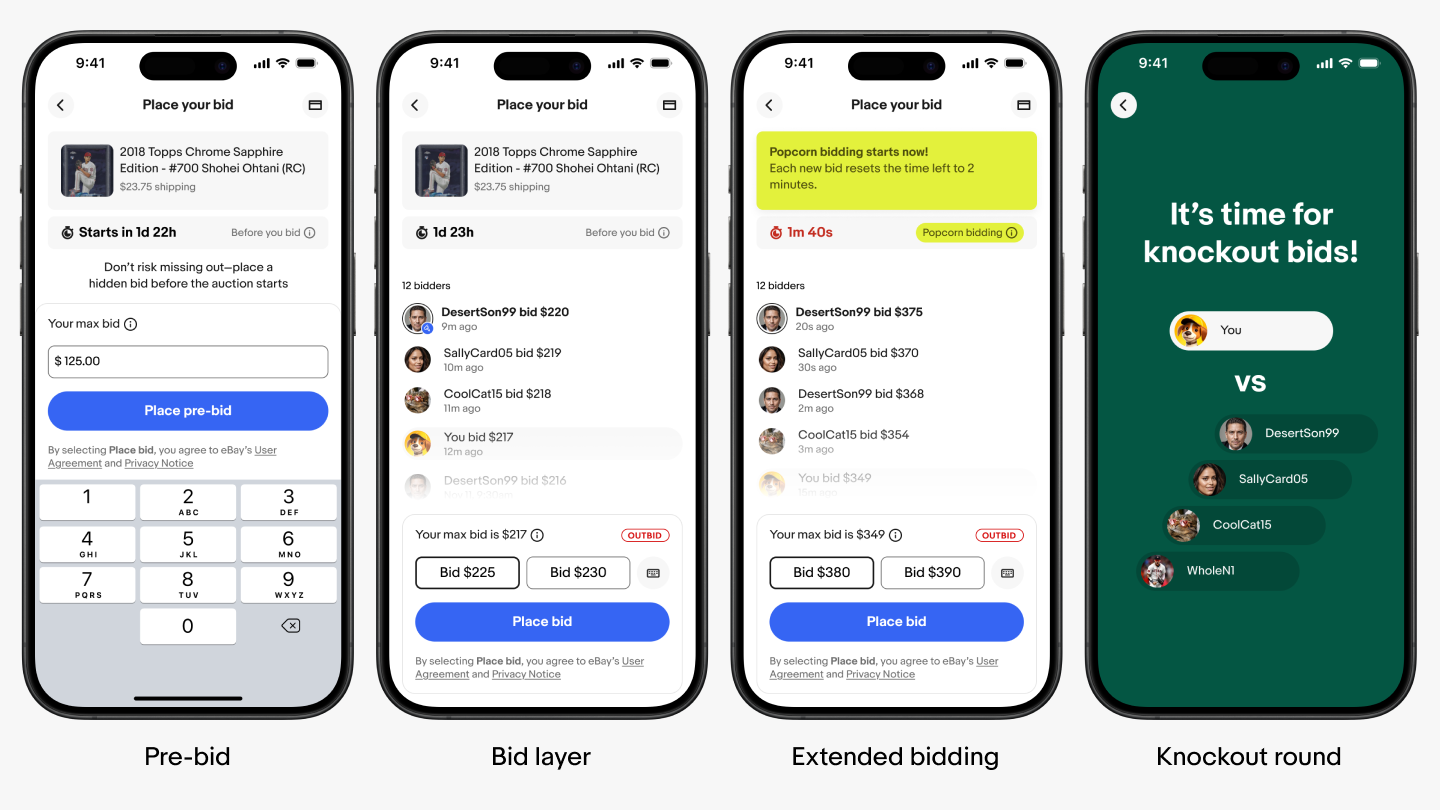
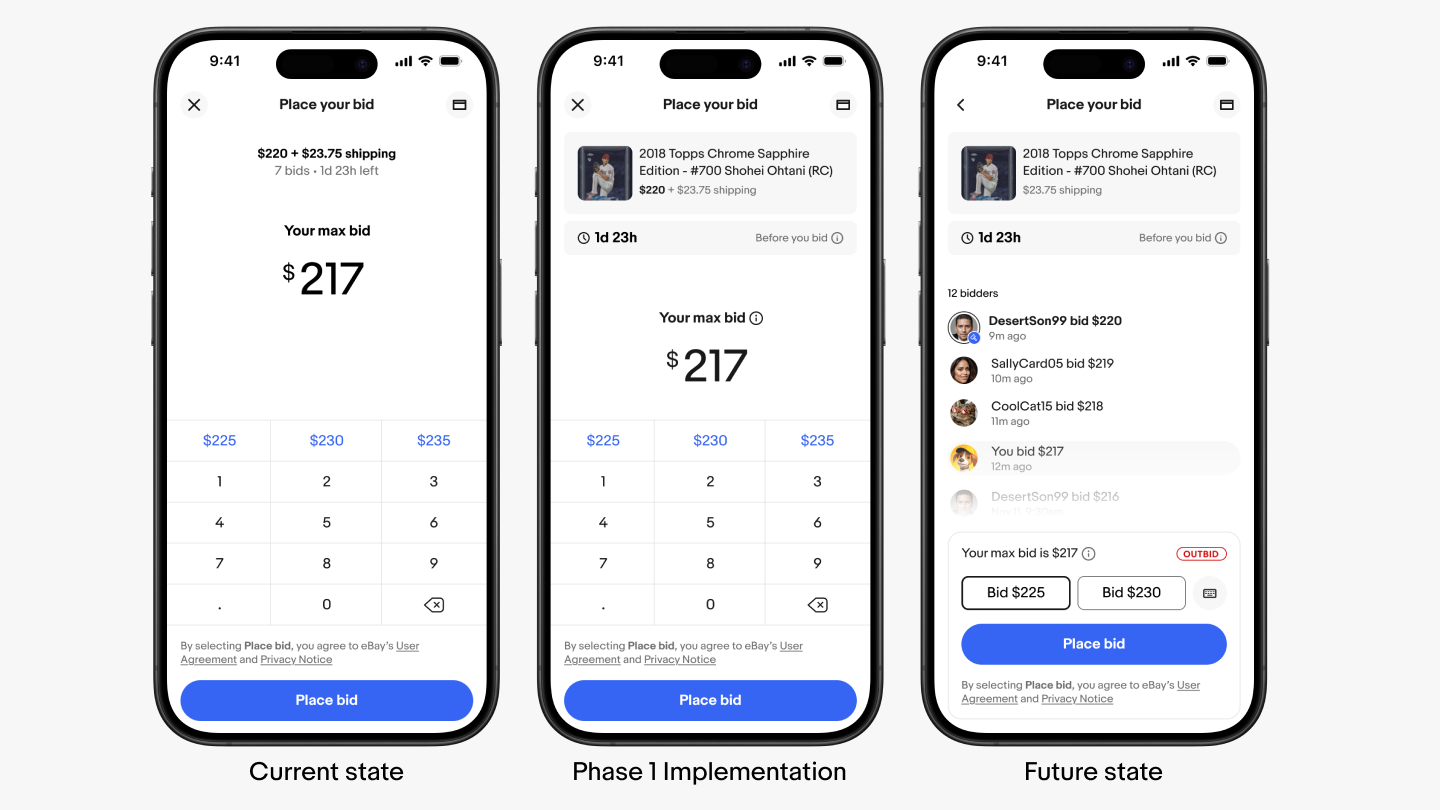
The work was designed with scalability and handoff in mind, ensuring a smooth transition to the team tasked with rolling this experience out by end of 2025. To support this phased approach, we focused on prioritizing key components that would balance low engineering effort for implementation with adding immediate value to buyers while laying the groundwork for the full implementation. Starting out with foundational elements like item details, bid activity, and power bidding, we developed a roadmap that allowed phased releases of the new components that we created. This interim strategy ensured buyers could begin to benefit from the improvements early while giving the implementation team clear milestones for building and testing remaining features. By breaking the project into manageable phases, we aligned with the organization's timelines and resource capabilities, setting the stage for a seamless and impactful introduction of the new design.